
PET thermoform knife RFQ guide: skeletal waste, startup sheet, and quote-ready buyer data
If a PET thermoform recycler needs new knives, the first RFQ question is usually not which steel is hardest. The first RFQ question is whether the job is in-line thermoform skeletal waste, start-up waste sheet with unpunched products, tray or clamshell cleanup, or a downstream granulator stage that is already seeing dust, noise, and unstable regrind.
That stage-fit logic is not just a plant-side preference. Rapid’s recycling-solutions page separates the GT Series as “optimized for cost effective in-line granulation of skeletal waste” and ThermoPRO as “a granulator developed for low noise granulation of thermoformed skeletal waste.” On Rapid’s official thermoforming solution page, ThermoPRO is shown for in-line recycling of start-up waste sheet with unpunched products up to 200 mm and punched skeletal waste, with full access to the cutterhouse, knives, and screen. On the ThermoPRO product page, the external loop-control version is described as suitable for skeletal waste with unpunched products up to 80 mm mold depth, while the stand-alone loop-control version handles deep-draw products up to 200 mm.
The commercial point is simple: buyers should describe the thermoform stage before they describe the knife. If your line is really a skeletal-waste in-line loop, a low-built packaging granulator, or a downstream tray and clamshell cleanup stage, the RFQ should say that from the first message. Otherwise a supplier can match the dimensions and still quote the wrong commercial job.
Material identity matters just as much. NAPCOR says PET thermoform packaging is technically recyclable with PET bottles, but also says most, not all, thermoforms are PET and that reclaimers prefer best sorting practices with auto-sorted material where possible. NAPCOR also says buyers may accept mixed bottle-and-thermoform bales or dedicated PET thermoform bales. For RFQ work, that means the buyer should say whether the feed is confirmed PET, whether sorting already controls look-alike contamination, and whether the knife complaint belongs to clean skeletal waste, mixed thermoform feed, or a later regrind step.
Why feed identity comes before steel grade in PET thermoform knife buying
PET thermoform knife work looks simple when the buyer only sees an old blade on the bench. In reality, the same nominal knife family may sit in very different duties: edge-fed skeletal waste, punched skeleton, start-up sheet with unpunched product, deep-draw tray production scrap, sorted post-use tray feed, or mixed thermoform cleanup before a later washing or reclaim stage. Those duties do not expose the knife to the same feed shape, loading, contamination risk, or commercial expectation.
That is why an RFQ that begins with “we need harder knives” is often weaker than an RFQ that begins with “this is a PET thermoform skeletal waste loop with unpunched start-up sheet” or “this is a downstream tray-cleanup granulator seeing more dust after a knife change.” Rapid’s official thermoforming material does not speak about thermoform lines as one generic task. It explicitly separates machine families and loop-control conditions by feed shape and process stage. Buyers should do the same.
For the site architecture, this keyword cluster is commercially strong because it maps directly to the real parts already on Leader Blades: the plastic granulator knife family, the bed-knife and fixed-side family, and, where trays or rigid cleanup enter another reduction step, the plastic crusher blade family. The RFQ should therefore identify both the machine stage and the part family it actually belongs to.
Machine-stage fit: GT Series, ThermoPRO, startup sheet, punched skeleton, and deep-draw products
Rapid’s official sources are unusually useful for RFQ logic because they tell buyers that thermoform recycling is not one uniform machine duty. The GT Series is positioned for cost-effective in-line granulation of skeletal waste. The thermoforming solution page shows ThermoPRO in-line with stand-alone loop control for start-up waste sheet with unpunched products up to 200 mm and punched skeletal waste. The ThermoPRO product page then adds a second distinction: external loop control for unpunched products up to 80 mm mold depth and stand-alone loop control for deep-draw products up to 200 mm.
For buyers, those are not marketing details. They are quote-routing details. A knife set for a shallow skeletal loop is not automatically quoted the same way as a set for deeper unpunched products. A line running punched skeleton continuously does not create the same knife-service question as a line processing start-up sheets or mixed tray reject. The safer RFQ names the loop-control style, the feed shape, and whether the buyer is quoting the moving knife only, the bed knife as well, or the broader cutting area.
If your line is actually more of a sheet-edge or profile-trim granulation task than a tray and clamshell task, compare this article with our sheet and profile edge-trim guide. If the complaint is mainly dust, fines, or rubbing noise after maintenance, compare it with our granulator knife-gap checklist. The practical lesson is that thermoform RFQs move faster when the machine stage is named in the same sentence as the current symptom.
What NAPCOR’s bale and sorting logic means for knife RFQs
NAPCOR’s official thermoform and bale-guideline pages matter because they connect knife buying to material reality. NAPCOR says PET thermoform packaging is technically recyclable with PET bottles, but most, not all, thermoforms are PET and reclaimers prefer best sorting practices that minimize contamination and maximize quality. It also says buyers may accept mixed bottle-and-thermoform bales or dedicated PET thermoform bales. On its PET Design & Bale Spec Guidelines page, NAPCOR says the model bale specifications were expanded to cover PET bottles, PET bottles with thermoforms, and PET thermoforms.
For a knife manufacturer, that means the buyer should tell the truth about the feed. Is this clean in-line production skeletal waste from a thermoformer? Is it sorted PET thermoform feed? Is it mixed bottle-plus-thermoform material? Is there look-alike contamination risk or non-PET thermoform risk? Those are not only recycling-program questions. They affect the mechanical duty the knife sees and whether the RFQ belongs to a clean granulator replacement, a more cautious fixed-side review, or a different upstream sorting conversation entirely.
That is one reason a simple “PET thermoform knife” request can be too vague. Commercially, a clean in-line thermoforming loop, a tray-reject cleanup stage, and a mixed thermoform regrind stream are not the same buying task. If the buyer leaves feed identity blank, the quote becomes slower and riskier even when the dimensions are complete.
RFQ checklist: what PET thermoform buyers should send before asking for price only
The fastest low-risk RFQs in this cluster combine dimensions with process evidence. Send these items in the first message where possible:
- Machine brand and model, plus whether the stage is GT Series-style skeletal waste, ThermoPRO loop control, low-built packaging granulation, tray cleanup, or another thermoform granulation stage.
- Material confirmation: PET sheet, PET tray, PET clamshell, start-up waste sheet, punched skeleton, or mixed thermoform feed.
- Whether the feed includes unpunched products, and if so the approximate mold depth or draw depth.
- Whether the issue belongs to moving knives, bed knives, fixed knives, or the broader cutterhouse condition.
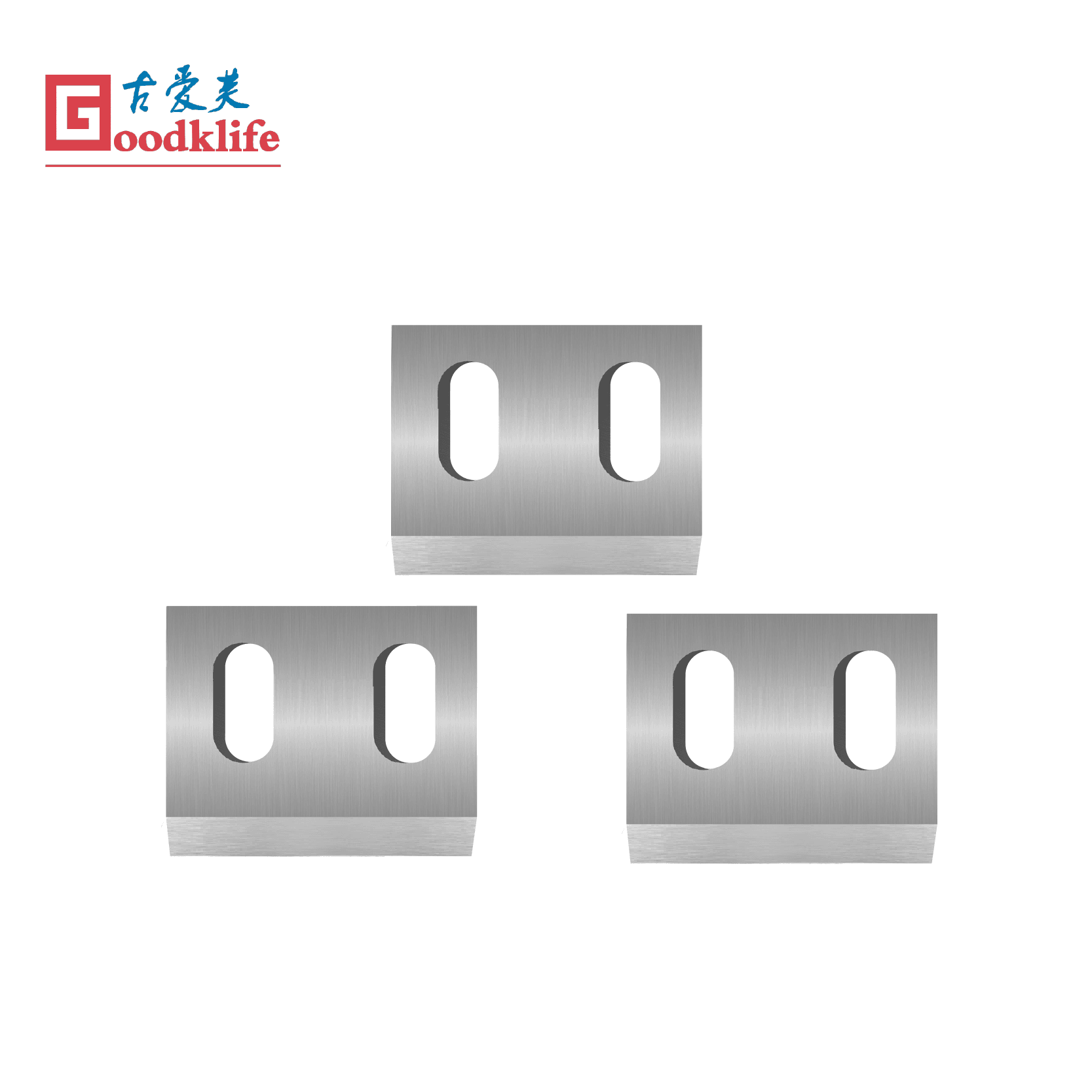
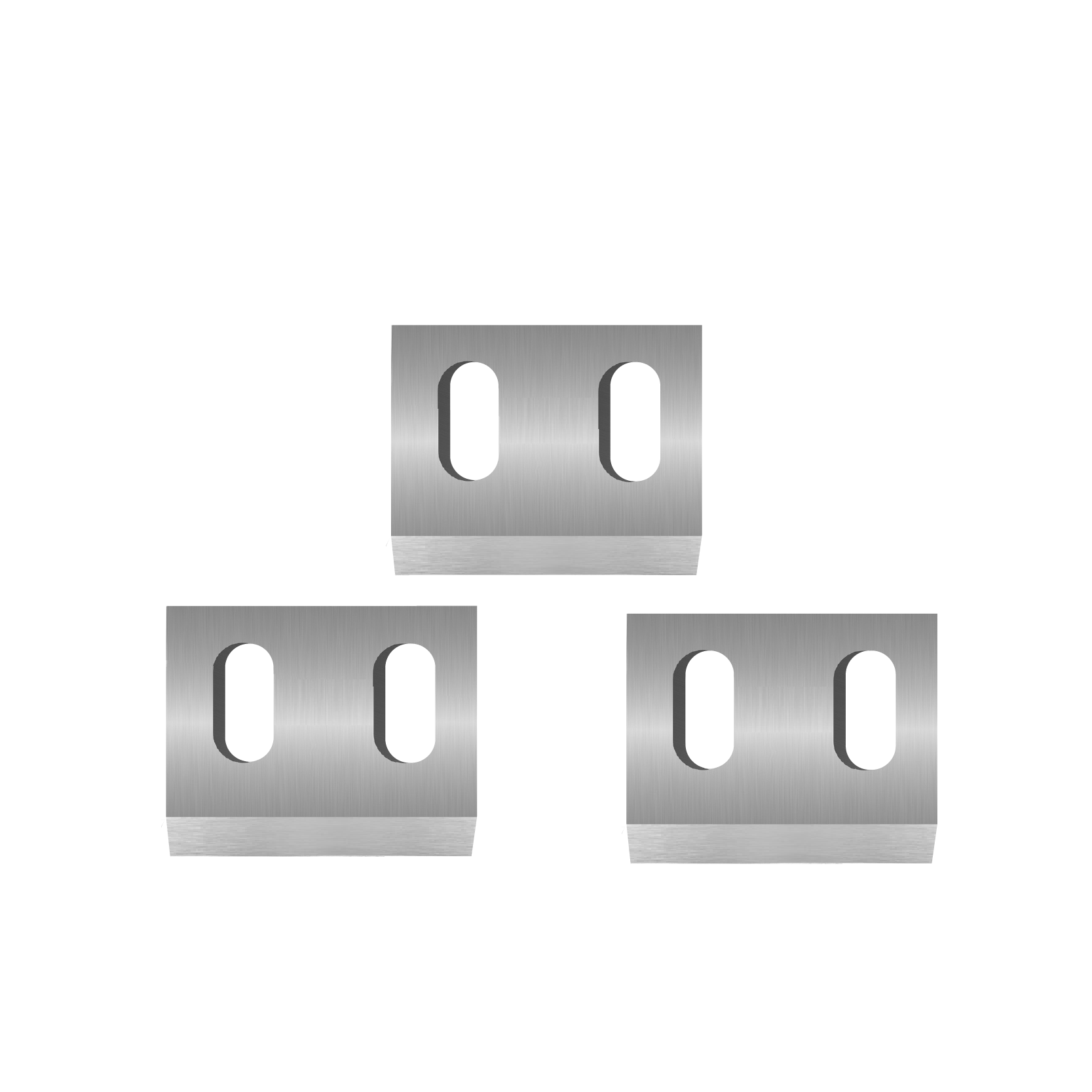
- Length, width, thickness, hole pattern, and measured photos of the old knives.
- Installed photos of the knife seat, fixed side, screen area, and loop-control or feed condition if relevant.
- Current symptom: more dust, higher noise, loop instability, poor pull-in, hot running, shorter knife life, or inconsistent regrind.
- Whether the feed is clean in-line waste, sorted thermoform material, or a stream with contamination risk.
Buyers often send good dimensions but weak process context. In thermoform work, that is a mistake. The same knife geometry can sit in different commercial duties, and the quote becomes safer when the buyer sends both geometry and process stage together.
Common buyer mistakes in PET thermoform knife RFQs
The first common mistake is to assume every clear thermoform is PET. NAPCOR explicitly says most, but not all, thermoforms are PET. If the buyer has not confirmed the feed stream, the RFQ should say so. The second mistake is to describe the line only as “a granulator” without saying whether it is an in-line skeletal-waste loop, a start-up sheet job, a deep-draw application, or a later tray cleanup stage. Rapid’s official thermoforming material shows why that missing stage detail matters.
The third mistake is to quote the moving knife alone when the complaint is already dust, noise, or unstable regrind. When the problem includes fines, rubbing, or fixed-side wear, the RFQ should name the bed knife or fixed side as part of the review. The fourth mistake is to leave out sorting and contamination context. Even where the old knife sample is available, the commercial duty can still be different if the material stream changed.
A practical buyer habit solves most of these problems: identify the material, identify the thermoform stage, say whether the feed is punched or unpunched, mention the current symptom, and send installed photos of both moving and fixed positions. That is the difference between a quick budget number and a useful production RFQ.
Practical selection notes and internal routes for thermoform buyers
For direct end users, the cleanest structure is to split the purchase into three levels. Level one is direct replacement because the line is healthy and the job is shutdown spare planning. Level two is knife-plus-fixed-side review because dust, noise, or unstable regrind suggests that the cutting pair should be reviewed together. Level three is stage-fit review because the feed shape, depth, sorting condition, or machine role changed enough that a same-geometry reorder now carries more risk.
For dealers and service teams, say whether the request is for a quick restart, a validation batch, or a broader aftermarket review from worn samples. That information changes the quote path. If you need the nearest internal references, start with the PET thermoform tray application guide, the plastic granulator knife category, the granulator bed-knife category, and, where tray cleanup crosses into another reduction step, the plastic crusher blade category.
Then compare representative parts such as the bottle granulator insert knife, granulator bed knife, granulator stator knife, and plastic crusher profile blade. When you are ready to quote, send the full stage description through the contact page instead of sending only an old knife photo with no thermoform context.
FAQ for PET thermoform knife RFQs
Do I need to confirm that the feed is really PET before requesting knives?
Yes. NAPCOR says most, but not all, thermoforms are PET. If the feed has not been confirmed, say so in the RFQ instead of assuming all clear thermoforms are the same.
Should I mention whether the material is punched skeleton or unpunched start-up sheet?
Yes. Rapid’s official thermoforming pages distinguish those duties, including different loop-control conditions and different product depths. That information changes the quote path.
Can you quote from worn samples and installed photos if we do not have drawings?
In many cases, yes. Clear dimensions, installed photos, and an honest description of the thermoform stage are usually enough to begin technical review.
When should I include the bed knife or fixed side in the RFQ?
Include it when the complaint already involves dust, rubbing noise, unstable regrind, or suspected fixed-side wear. Those symptoms rarely belong to the moving knife alone.
Which internal pages should thermoform buyers compare next?
Compare the PET thermoform tray application guide, the sheet and profile edge-trim guide where relevant, the granulator knife-gap article, the granulator and bed-knife categories, and the contact page.
Primary sources
This article is an original buyer-side synthesis built only from official machine-maker and industry-association sources.
- Recycling Solutions (Rapid Granulator): Rapid separates thermoforming-related granulation routes and positions GT Series and ThermoPRO as different machine contexts for buyers.
- Thermoforming (Rapid Granulator): Rapid’s thermoforming page describes ThermoPRO in-line with stand-alone loop control for start-up waste sheet with unpunched products up to 200 mm and punched skeletal waste, plus open access to knives and screen.
- ThermoPRO (Rapid Granulator): Rapid’s ThermoPRO product page adds loop-control detail, low-noise positioning, access to the cutting area, and the 80 mm versus 200 mm product-depth distinction.
- PET Thermoform Recycling (NAPCOR): NAPCOR says PET thermoform packaging is technically recyclable with PET bottles but most, not all, thermoforms are PET, and buyers may accept mixed or dedicated PET thermoform bales.
- PET Design & Bale Spec Guidelines (NAPCOR): NAPCOR says PET bale specifications were expanded to include PET bottles, PET bottles with thermoforms, and PET thermoforms.