
Planer and Jointer Knife RFQ Guide: What Buyers Should Send Before Ordering Straight Knives
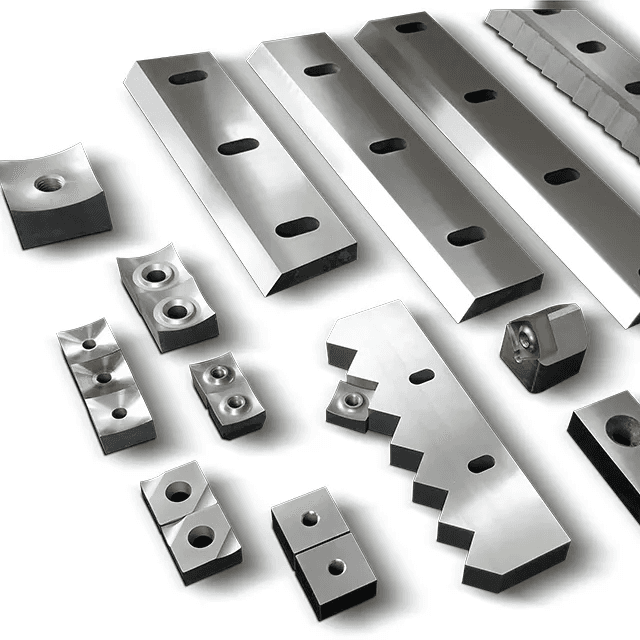
If your straight knives are leaving chatter marks, torn fibers, fuzzy surfaces, or irregular cutter marks, the first RFQ question is usually not “Which steel is hardest?” The first question is whether the buyer is asking for a simple spare-part replacement or for a knife order that already needs cutterhead, jointing, and machine-stage context to avoid repeating the same finish problem.
That distinction matters because official woodworking OEM guidance repeatedly describes surface quality through the interaction of knife geometry, cutting-circle accuracy, spindle behavior, jointing condition, pressure and guiding elements, and stable feed. For a purchasing team, that means a serious RFQ should start with machine duty, finish complaint, and installed-part context instead of dimensions alone.
If your plant is running a jointer, a thickness planer, or a throughfeed moulder, the buying logic is not the same. The knives may all look like straight bars, but the commercial risk is different at each stage. That is why this guide puts buyer conclusion, machine-stage fit, and RFQ criteria in the opening paragraphs instead of hiding them later.

Buyer conclusion: quote straight knives by machine stage and finish risk, not by outside dimensions alone
When buyers say “same knife again,” they often mean “the outside dimensions look familiar.” But official woodworking guidance treats the cutting result as a system outcome. If the line is already showing chatter, one-sided marks, fuzzy grain, or unstable finish after startup, a quote that ignores cutterhead fit, jointing behavior, and the real machine stage can recreate the same complaint with new steel.
WEINIG’s tooling guidance says workpiece surface quality is determined by concentric tolerance, spindle speed, and the number of knives in the cutterhead, and it explains that all knives must share the cutting circle if they are all to cut. That is not just an engineering detail. It is practical RFQ logic. A replacement order that treats the knife as a bar of steel instead of part of a running head can miss the real cause of the surface complaint.
That is why we recommend reading this article together with our straight-knife solution page, our new solid-wood application guide, and the contact page before sending the RFQ.
Machine-stage fit: jointer, planer, and moulder duties create different buying priorities
A jointer is usually protecting a flat reference face or straight edge for downstream use. A thickness planer is usually protecting finish consistency and predictable stock removal. A throughfeed moulder is often protecting visible surface quality and profile regularity on parts that are already close to saleable output. Those are different commercial jobs even if the knife format looks similar.
That distinction matters because the buyer may still have the same machine model while the work itself changed. A line may move from softwood to hardwood, from rough surfacing to visible-finish work, or from one feed-speed window to another. The knife part number may not change immediately, but the commercial risk does. In those cases, “quote the same knife” is not enough information.
If you are a dealer, service team, or buyer screening multiple requests, the shortest reliable method is to state the machine stage first. “Jointer edge quality dropped,” “planer finish became fuzzy after species change,” or “moulder marks drift after startup” gives a supplier much better guidance than a dimension table alone.
What the official sources actually tell buyers to pay attention to
WEINIG’s jointing-technology page explains that consistently high surface quality depends on a controlled joint land and on suitable machine and tool conditions, including even feed, capable spindles, precise grinding, and low concentric tolerance. For buyers, that means a complaint about finish quality can already be telling you whether the request is a normal replacement order or a wider straight-knife-system issue.
WEINIG SOLID PROFILE P 1500 ties product quality to pressure and guiding elements, repetition precision, and spindle behavior. SCM’s profiset 40 highlights smooth workpiece movement and outfeed support for better finishing. Both sources point buyers in the same direction: the knife matters, but the machine stage and support conditions matter with it.
That is the practical reason a good RFQ should say whether the complaint is short knife life only, one-sided surface drift, chatter, tear-out, or inconsistent profile marks. These are different purchasing situations even when the knife length looks identical on paper.

RFQ checklist: what to send before asking for price only
The best low-risk RFQs in this category combine part geometry with finish evidence. Purchasing does not need a full machine manual to start, but it does need to show the supplier what the line is actually trying to achieve.
- Machine brand and model, plus whether the line is a jointer, thickness planer, throughfeed moulder, or another straight-knife stage.
- Knife dimensions if known, plus one flat measured photo and one side photo if bevel direction matters.
- Cutterhead or clamping style, and whether the line uses in-machine jointing.
- Wood species, moisture condition, and whether the duty is general surfacing, visible finish, or profile work.
- Current complaint: chatter marks, torn grain, fuzzy surface, one-sided marks, short edge life, or unstable startup finish.
- Whether the request is direct replacement, sample review from worn parts, or a broader knife-plus-head-fit review.
Buyers often send knife length, width, thickness, and a hole pattern only. That can be enough for a rough budget figure, but it is not enough for a lower-risk production quote. If the species changed, the feed speed changed, the line now targets visible-finish work, or the previous sample already came from a bad run, the same geometry may still be the wrong commercial answer.
Working from worn samples: what suppliers need to know
Aftermarket straight-knife work often starts with worn parts rather than with clean drawings. That is normal. What matters is whether the supplier knows what the sample represents. If the old knife came from a healthy run, it can often be used as a reliable reference. If the old knife came from a line that was already producing chatter, tear-out, or unstable finish, the supplier should know that the sample may describe the wrong condition as much as the right one.
That is why your RFQ should not only say “see attached sample.” It should also say whether the sample came from a good run, whether it was jointed in machine, whether the species or moisture changed, and whether the finish complaint started before or after the last knife change. Those few lines of context often save more time than a second round of measurements.
Species, moisture, and finish target belong in the RFQ
Hardwood, softwood, wetter stock, drier stock, straight surfacing, and visible profile work do not all ask the same thing from the edge. Buyers do not need to prescribe the metallurgy on day one, but they do need to describe the work honestly. A line surfacing mixed softwood for general stock preparation is not buying the same risk as a line finishing drier hardwood components where visible surface quality drives acceptance.
For dealers and service teams, this is especially important. Two end users may ask for the same straight-knife dimensions but need different purchasing advice because their duties are not the same. If the downstream customer cares about visible finish, say that in the first line. If the line is more sensitive to rapid changeovers than to maximum edge life, say that too.
Practical selection notes for mills, dealers, and service teams
The safest quoting method is to separate requests into three levels. Level one is direct replacement because the line is healthy and the request is purely spare-part driven. Level two is replacement plus cutterhead or jointing review because chatter, uneven marks, or one-sided finish problems already suggest a system issue. Level three is a broader duty review because the species, feed speed, or finish target changed enough that the old replacement logic no longer fits.
This structure keeps the RFQ commercial and practical. It also prevents one of the most common buying mistakes in this category: treating straight knives as a dimensions-only product while the real defect sits in cutting-circle control, jointing, spindle behavior, or workpiece guidance.
Internal routes and buyer-side next steps
Start with our planer, jointer, and veneer knife category, then compare the wood planer knife, planer knife, industrial planer knife, and jointer knife.
Then compare the broader straight-knife solution page, our new solid-wood application guide, the veneer peeling RFQ guide, and the contact page. The practical goal is simple: quote the real machine duty and finish risk, not just a remembered part number.
FAQ
Do I need to mention the cutterhead or clamping style if I only want replacement knives?
Yes. Official guidance links finish quality to cutting-circle behavior, jointing, and machine support conditions, so cutterhead context reduces RFQ risk.
What if I only have worn samples and no drawing?
That is common. Measured photos, the machine model, the wood stream, and a clear finish complaint are usually enough to begin technical review.
Why should I mention whether the line is a jointer, planer, or moulder?
Because those stages do not buy the same risk. The downstream consequence of a finish problem is different in each stage, and the RFQ should show that clearly.
Should I mention species and moisture if the dimensions already match?
Yes. Species and moisture affect the commercial duty of the edge and can change whether a direct replacement is still the safest decision.
Which internal pages should I compare next?
Compare the straight-knife category, the planer and jointer product pages, the straight-knife solution page, the solid-wood application page, and the contact page.
Primary sources
This article is an original buyer-side synthesis built from official woodworking OEM sources.