
Typical brush chipper RFQ problems behind the inquiry
- •The crew says chip quality fell off after the last knife change, but the RFQ still names only the loose knife and ignores the anvil, bolts, and installed gap.
- •The buyer has worn samples and machine photos, yet no one has documented whether the machine is doing daily tree-service brush work, storm cleanup, rental duty, or a heavier wood-waste job that belongs in another application.
- •The line now throws more slivers, chunks, vibration, or plugging, but the purchasing team is still treating the job as a same-size reorder instead of a chipper-chamber review.
Buyer conclusion first: quote the knife set with the anvil side and the crew duty
If a tree-service brush chipper starts making stringy chips, oversized pieces, more plugging, or more vibration, the lower-risk RFQ is usually not a knife-only reorder. The safer route is to quote the brush chipper knife family together with the anvil or counter side, the hardware package, and the real machine duty.
That conclusion is not guesswork. On its official brush-chipper and parts material, Vermeer positions brush chippers around tree-care crews working under tough wood and tight schedules, while its December 2024 maintenance article says sharp knives improve chip quality and productivity, dull knives create poorer chips and more fuel use, and knives should be replaced in matched sets of two to maintain drum balance. Bandit is even more direct: dull knives lead to bad quality chips, chunks, slivers, more strain on knives and mounting, more vibration, and more discharge plugging.
For purchasing teams, those official signals matter because they turn chip quality complaints into RFQ instructions. A serious brush chipper inquiry should say whether the complaint is normal wear, unbalanced service history, an anvil-side issue, or a tree-service feed change. When the supplier only receives outside dimensions, it may still be possible to quote a part, but it is much harder to quote the correct maintenance package.
Morbark’s BVR10 page also highlights a side-load anvil designed for quick adjustment and flipping. That is a buyer reminder that the fixed side is a live wear-part decision, not an afterthought. If the anvil condition is missing from the RFQ, the quote is already missing part of the cutting system.
Machine-stage fit: tree-service brush chippers do not buy the same way as whole-tree or biomass lines
This application page is for tree-service and arborist brush chippers, not for every wood-reduction machine on the site. That distinction matters commercially. A hand-fed or crew-scale brush chipper that works daily on limbs, brush, mixed tree species, and storm-cleanup debris is judged by restart speed, field safety, and chip consistency in a very different way from a whole-tree or biomass-preparation line.
On the official Vermeer brush-chipper page, the machine family is presented for tree-care professionals, not for generic wood processing. The service logic therefore changes. Tree-service buyers often need quick turnaround, reliable matched sets, and a low-risk way to restore chip behavior fast. If the job is actually a pallet, biomass, or whole-tree application, compare this page with our wood pallet and biomass chipper guide and the wood pallet and biomass chip-quality solution before sending the RFQ.
Machine-stage fit also means naming the working conditions clearly. Brush chippers see very different wear when crews process clean limbs, fibrous palm material, hardwood, sandy storm debris, or mixed roadside feed. Vermeer’s own maintenance note says knife wear varies with the processed material and warns that sand and metal debris shorten knife life. That does not justify any life promise, but it does justify a better RFQ: tell the supplier what the machine actually cuts today, not only what it used to cut when the old part number was first recorded.
Sharpness, matched sets, gap control, and hardware belong in the same buying decision
Official brush-chipper guidance repeatedly ties knife performance to more than the knife bar alone. Vermeer says replacement knives should be installed in sets of two to preserve drum balance, that anvil condition and knife clearance are critical, and that the gap between the shear bar and the knife must be readjusted after sharpening to meet the owner’s-manual specification. It also says new Vermeer-approved bolts should be used when installing new or sharpened knives because reused bolts lose clamping force after re-torquing.
For buyers and service shops, that means the RFQ should say more than “need two knives.” It should state whether the current set has been sharpened several times, whether the machine is still running on the same anvil position, whether bolts were reused, whether the seat or clamp shows wear, and whether the complaint started immediately after maintenance. Those details help separate normal knife replenishment from a broader chamber-reset job.
Bandit’s official parts guidance reinforces the same logic from the symptom side. If dull knives can cause bad chips, chunks, slivers, strain on mounting, vibration, and plugging, then the quote must cover the conditions that create those symptoms. When a buyer says “the machine now vibrates more” or “the discharge plugs more often,” that is not only a steel-grade question. It is a knife, mounting, balance, and fixed-side question at the same time.
What common field symptoms usually mean before you ask for price only
Stringy chips, slivers, or oversized pieces usually tell the buyer to review edge sharpness, anvil condition, and actual gap setting before assuming the wrong alloy was supplied. More plugging and poorer throw are official Bandit-side warning signs for dull knives. More vibration can point to imbalance, mounting strain, or a change in how the knives were replaced. Sudden short life can be a contamination or duty-change problem if the crew recently moved into harder or dirtier material.
These signals are important because brush chipper buyers often do not control the same stable feed every day. Municipal crews, arborist contractors, storm-cleanup teams, and rental fleets can all see wide changes in branch size, species, moisture, and contamination. A knife that was commercially correct for one duty can be a poor risk for the next one even if the machine model is unchanged.
When the symptom appears, start from the real wear-part families on the site: the brush chipper knife, the wood chipper replacement knife, the Bandit-compatible drum chipper knife, and the counter knife and anvil set. If the buyer already suspects a fixed-side problem, also review the Bandit-compatible counter knife and anvil set.
RFQ checklist for arborist and tree-service brush chipper knives
The fastest low-risk RFQs combine part geometry with field context. Send these items in the first email or inquiry form whenever possible:
- Machine brand, model, and serial range if known.
- Knife count per set and whether the machine requires matched pairs for balance.
- Length, width, thickness, hole pattern, and a measured photo of the old knife.
- Installed photos of the knife seat, clamp, bolt area, and the anvil or shear-bar side.
- Whether the current knives are new, once-sharpened, or have been re-sharpened several times.
- Tree-service duty today: daily brush work, storm cleanup, rental fleet use, municipal pruning, or mixed jobsite debris.
- Current symptom: bad chips, chunks, slivers, vibration, plugging, hotter running, bolt loosening, or broken corners.
- Whether you want direct replacement, knife-plus-anvil review, or a wider chamber review before shutdown.
Buyers often have only worn parts and phone photos. That is normal in aftermarket brush-chipper work. Clear installed photos and a truthful description of the field symptom are usually more valuable than a dimension sheet with no context.
Practical selection notes for fleets, dealers, and service shops
The safest way to organize a brush-chipper RFQ is to separate the job into three levels. Level one is direct replacement because the machine is healthy and the request is for planned spare sets. Level two is knife-plus-anvil or hardware review because chip quality, vibration, or repeated sharpening history suggests the fixed side and clamping package also matter. Level three is wider chamber review because the feed changed, the maintenance history is uneven, or the machine now runs in a different service environment than before.
For dealers and fleet managers, say whether the purchase is an urgent field repair, a small validation batch, or a planned annual spare program. Those are different commercial situations. The supplier should know whether the goal is fast restart, low-risk fit validation, or a broader maintenance standard for multiple machines.
Before sending the final RFQ, compare the wood chipper knife category, the counter knife and anvil category, the rotor-side RFQ article, the counter-side RFQ article, and the contact page. If the machine is actually doing heavier pallet or biomass work, switch to the pallet and biomass application guide so the RFQ matches the real duty.
Representative parts for this line
Use the closest shape below as your RFQ reference, then send dimensions or old-blade photos for fit review.
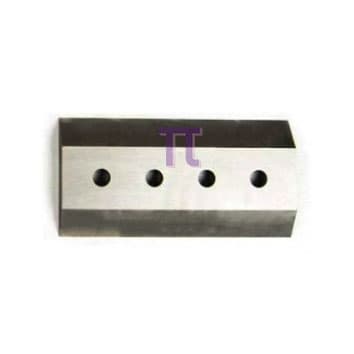
WCK-007
Brush Chipper Knife
Brush Chipper Knife is built for brush chipper lines and tree service maintenance. Available in A8 for edge retention, impact tolerance, and repeatable regrinding. The profiled body suits fixed or rotary stations where alignment and edge exposure matter.
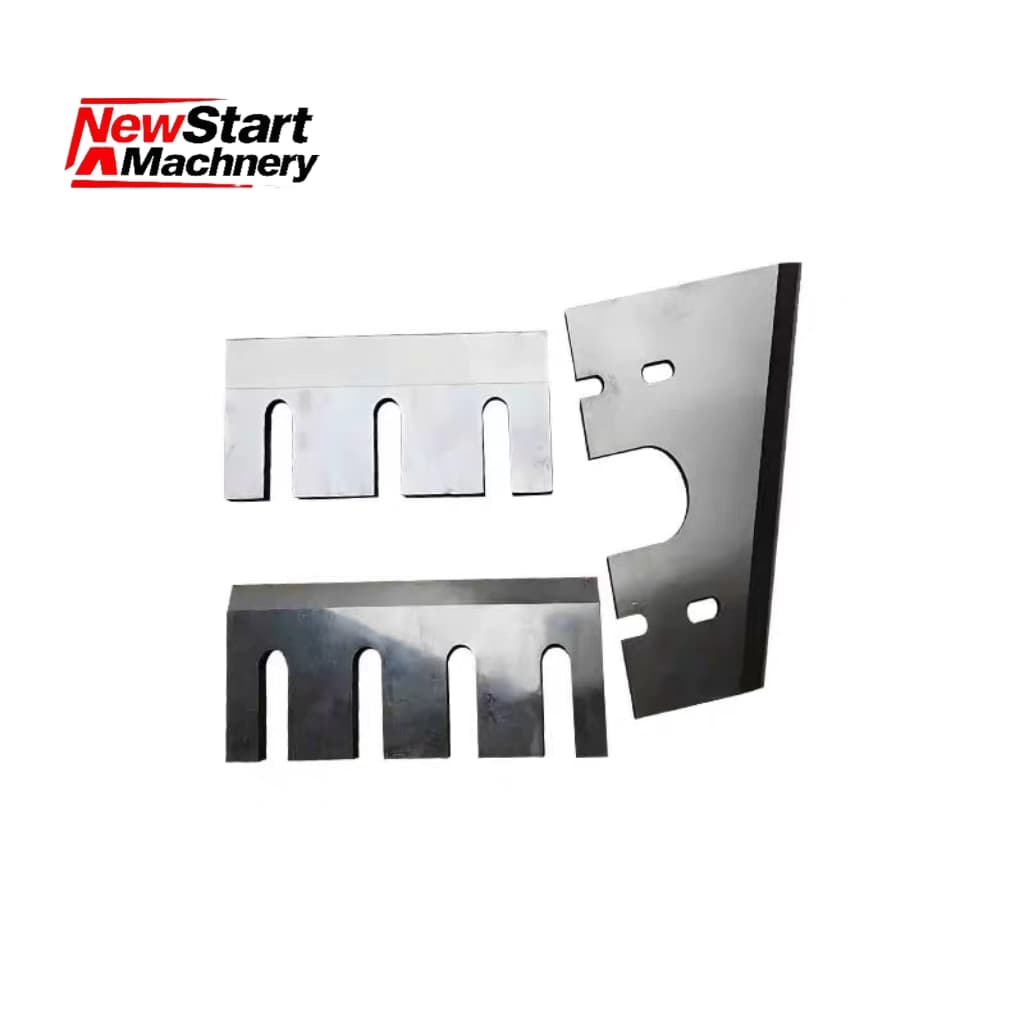
WCK-004
Wood Chipper Replacement Knife
Wood Chipper Replacement Knife is built for drum wood chipper lines and disc chipper systems. Available in HSS / 9CrSi / SKD11 / carbide-tipped alloy steel for edge retention, impact tolerance, and repeatable regrinding. The insert-style format fits compact cutter seats and short replacement positions.
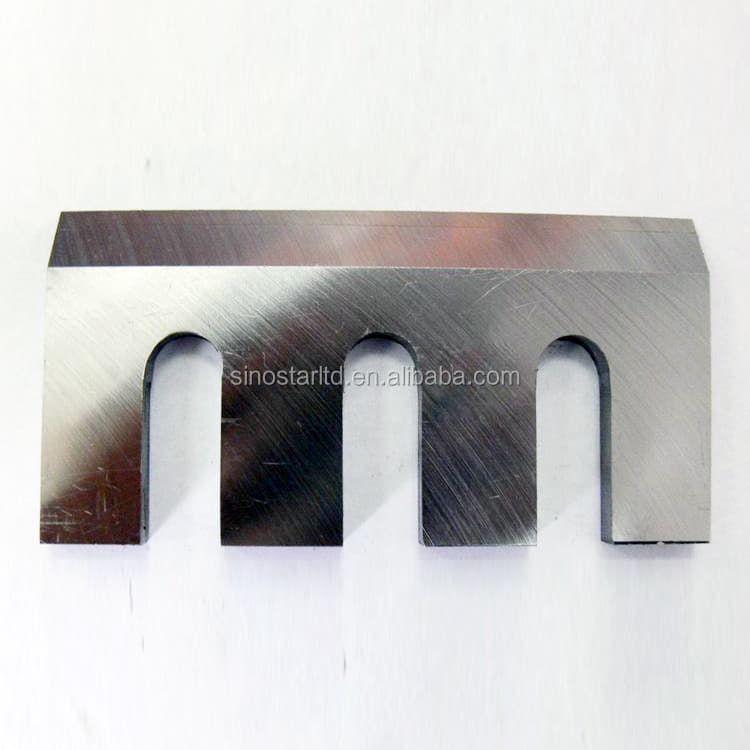
WCK-009
Bandit-Compatible Drum Chipper Knife
Bandit-Compatible Drum Chipper Knife is built for bandit-style drum chipper maintenance and forestry and biomass chipping. Available in SKD11 / D2 / HSS for edge retention, impact tolerance, and repeatable regrinding. The profiled body suits fixed or rotary stations where alignment and edge exposure matter.
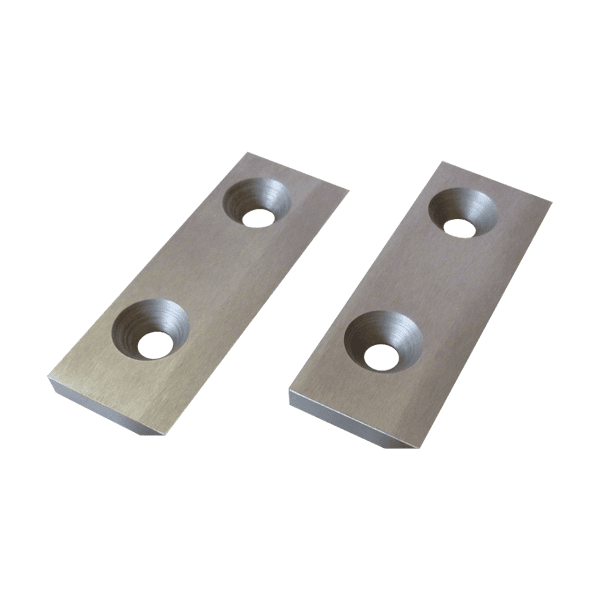
CCA-001
Chipper Counter Knife and Anvil Set
Chipper Counter Knife and Anvil Set is built for counter knife replacement and anvil and bed knife maintenance. Available in SKD11 for stable counter edges and controlled chip sizing. The profiled body suits fixed or rotary stations where alignment and edge exposure matter.
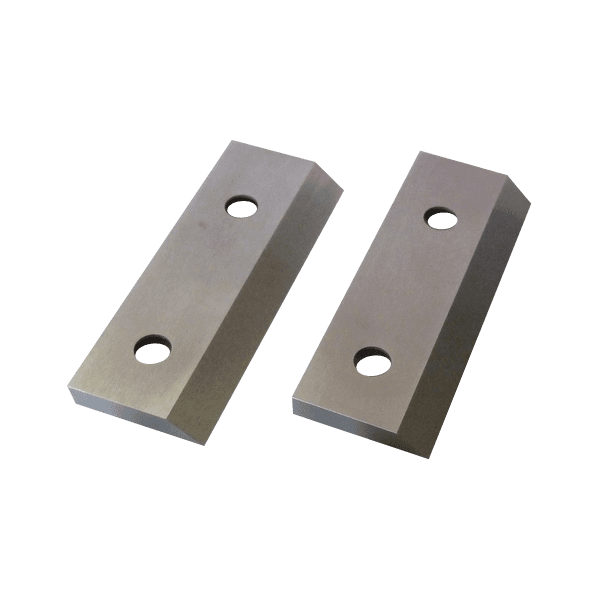
CCA-003
Bandit-Compatible Counter Knife and Anvil Set
Bandit-Compatible Counter Knife and Anvil Set is built for bandit chipper counter knife replacement and anvil set maintenance. Available in SKD11 for stable counter edges and controlled chip sizing. The profiled body suits fixed or rotary stations where alignment and edge exposure matter.
Related knife categories
Related articles
Wood Chipper Knife RFQ Guide: What Buyers Should Confirm Before Ordering Rotor Knife Sets
A source-backed buyer guide for drum, disc, and brush chipper rotor knives: machine-family fit, wood-stream clues, hardware questions, and the RFQ details that reduce wrong-fit reorders.
Read articleWood Chipper Counter Knife and Anvil RFQ Guide: What Buyers Should Confirm Before Ordering
A source-backed buyer guide for wood chipper counter knives and anvils: chip quality, knife pairing, field photos, and the RFQ details that prevent wrong-fit reorders.
Read articleBlade Maintenance Tips for Longer Life
Inspection intervals, alignment checks, and cleaning—for granulators, crushers, and shredders.
Read articleFAQ for brush chipper knives in tree-service work
Should brush chipper knives be replaced in matched sets?+
Do I need to mention the anvil or shear-bar side if I only want new knives?+
Can you quote from worn samples and phone photos only?+
Should I mention tree species, storm debris, or contamination in the RFQ?+
Which internal pages should buyers compare next?+
Primary sources behind this application guide
This page was written from official OEM brush-chipper material and focuses on buyer-side maintenance signals that change the RFQ.
Vermeer
Brush chippers
Defines the brush-chipper machine family around tree-care work and gives the page its true site-fit context.
View sourceVermeer Pro Tips
Sharp brush chipper knives maximize chip quality and productivity
Explains that sharp knives improve chip quality and productivity, knives should be replaced in sets of two, anvil clearance must be reset after sharpening, and new approved bolts should be used.
View sourceBandit Industries
Parts
States directly that dull knives cause bad quality chips, chunks, slivers, more strain, more vibration, and more plugging.
View sourceMorbark
BVR10 Brush Chipper
Shows the side-load anvil as a service feature for quick adjustment and flipping, reinforcing that the fixed side belongs in the buying decision.
View sourceNeed brush chipper knives checked against your tree-service duty?
Send the machine model, knife pattern, anvil-side photos, and the exact chip complaint. We can review direct replacement, matched-set risk, and whether the fixed side also belongs in the RFQ.