
Blow Molding Granulator Knife RFQ Guide: What Bottle and Canister Processors Should Send Before Ordering
If a blow-molding line suddenly makes dustier regrind, bridges more often on hollow rejects, or starts sending inconsistent HDPE flakes to the next stage, the first RFQ question is not which steel is hardest. The first RFQ question is whether the quotation is describing the correct machine stage and the correct scrap form.
ZERMA and Rapid both frame blow-molding granulation around inline recycling of hollow reject parts, while Rapid's FAQ clearly separates a granulator from a shredder. For buyers, that means the RFQ has to say whether the job still belongs to direct inline granulation or whether the scrap has become too bulky, too mixed, or too centralised for that route.
Use this article together with our blow-molding solution page, our HDPE bottle and container application guide, and the contact page when you want the quote to reflect the real machine-stage fit instead of only the last part number.
Buyer conclusion: quote the blow-molding scrap by stage, not by knife outline only
Rapid's 200 Series page says the machine is ideal for direct recycling of reject products from blow molding and that the right cutterhouse depends on whether the products are voluminous and lighter or more compact and thicker walled. ZERMA GST 250 says the machine is designed for inline blow-moulding recycling of bottles, canisters, and similar hollow parts. Those official references tell the buyer something simple but important: the first part of a serious RFQ is not dimensions. It is the actual scrap description and the actual machine stage.
If the plant now handles more canisters, more startup rejects, more thick-walled parts, or scrap from more than one blow-molder, the RFQ should say that before price is requested. A knife that still fits the holder may still be the wrong commercial answer if the chamber task has changed.
That is why a serious inquiry should say whether the job is direct inline recycling beside the machine, central granulation before washing, or part of a wider rigid-HDPE reduction route. The quotation changes with that answer.
Machine-stage fit: when the complaint belongs to the granulator and when it no longer does
Rapid's FAQ defines a granulator as a cutting mill for scrap components or pre-shredded materials and a shredder as the lower-speed, higher-torque machine for larger items and volumes. Buyers should use that distinction in plain language. If the line still feeds light hollow rejects at controlled volumes, the RFQ is usually a granulator RFQ. If the line now receives larger, denser, or more mixed scrap, the safe RFQ may belong to a shredder plus granulator route instead.
WEIMA's WLK 2000 page is valuable because it lists blow molded bottles, canisters, and buckets and says the shredder can be part of a two-stage solution. WEIMA's WSM 500/700 page then positions granulation around pre-shredded blow-moulded products and thick-walled startup parts. That is the stage boundary buyers should describe, especially when a line that used to be "inline only" quietly grew into a more central rigid-plastic reclaim task.
If the complaint is dust, higher amps, unstable flake size, or poor grip on hollow parts, the RFQ should say whether the chamber is still receiving the same kind of material as before. That one sentence often decides whether the quote should stay in the granulator family or widen to a stage-fit review.
What buyers miss when they send knife dimensions only
Dimensions are still necessary, but they are not enough when the complaint is no longer simple wear. On the Rapid 200 page, cutterhouse, rotor type, and screen condition all sit beside the knife as part of the commercial result. On the Rapid spare-parts page, quality regrind, fewer rejects, and less dust and fines are linked to the right spare parts and maintenance. That means the RFQ should include the fixed side and the screen whenever output quality, dust, or running stability changed.
Buyers often send only the moving knife and a part number. That can still produce a preliminary price, but it does not tell the supplier whether the screen is worn, whether the fixed side has drifted, or whether the chamber simply lost grip on lighter hollow parts. Those are exactly the details that determine whether the next order will restore the process or only repeat the last failure.
The same issue appears when the reclaim target changed. If the output now feeds washing, color separation, or a more value-sensitive HDPE stream, the RFQ should say that. A knife order for basic internal reuse is not always the same as a knife order for wash-line-ready flakes.

Cutterhouse, rotor, and screen details that belong in the RFQ
Rapid says the super-tangential cutterhouse gives optimal grip for voluminous lighter products such as jars and bottles, while the tangential option is the alternative for more compact and thick-walled products. That one machine-maker distinction is extremely useful buyer language. It means the RFQ should tell the supplier whether the chamber is struggling with light hollow grip or with heavier part density.
The same page also stresses rotor choice and screen condition. If the line suddenly makes more dust or more uneven granules, the RFQ should not pretend the only question is knife steel. It should say whether the screen is worn, whether the fixed side was checked, and whether the complaint started after a knife change, after a screen change, or after the scrap form changed.
Rapid's FAQ adds another helpful point: granulators usually produce a smaller, more consistent output that is ideal for recycling and reuse. So if the plant says the output is no longer consistent, the RFQ should say whether the problem is chamber fit, scrap form, or stage mismatch. That gives the supplier something commercially useful to work from.
When a blow-molding line has outgrown inline granulation
Plants often notice this indirectly. The machine still runs, but operators see more bridging, more rejects waiting beside the machine, higher amps, or a growing need to batch scrap centrally instead of returning it directly. Those are often stage-fit signals rather than simple knife-life signals.
WEIMA and WEIMA together give the official process logic for this situation: shred first when the material is too bulky, then granulate when the prepared feed is ready for finer size reduction. Buyers should say directly if that is where the line has moved. It is cheaper than forcing the supplier to guess from a worn knife alone.
This matters even more when the line now feeds a wash line or mixed rigid-HDPE reclaim route. Once the task changes from "put this straight back beside the blow-molder" to "prepare this for cleaning, sorting, and reprocessing," the RFQ should say so in the first paragraph.
RFQ checklist: what bottle and canister processors should send before ordering
The fastest low-risk blow-molding knife RFQs combine part geometry with actual chamber duty. Send these items in the first message where possible:
- Machine brand and model.
- Stage description: direct inline granulation, central granulation, or part of a two-stage shred-and-granulate route.
- Scrap form: flash, top-and-tail trim, bottles, canisters, handles, startup parts, or mixed reject products.
- Reclaim target: in-house reuse, wash-line feed, or higher-value HDPE reclaim.
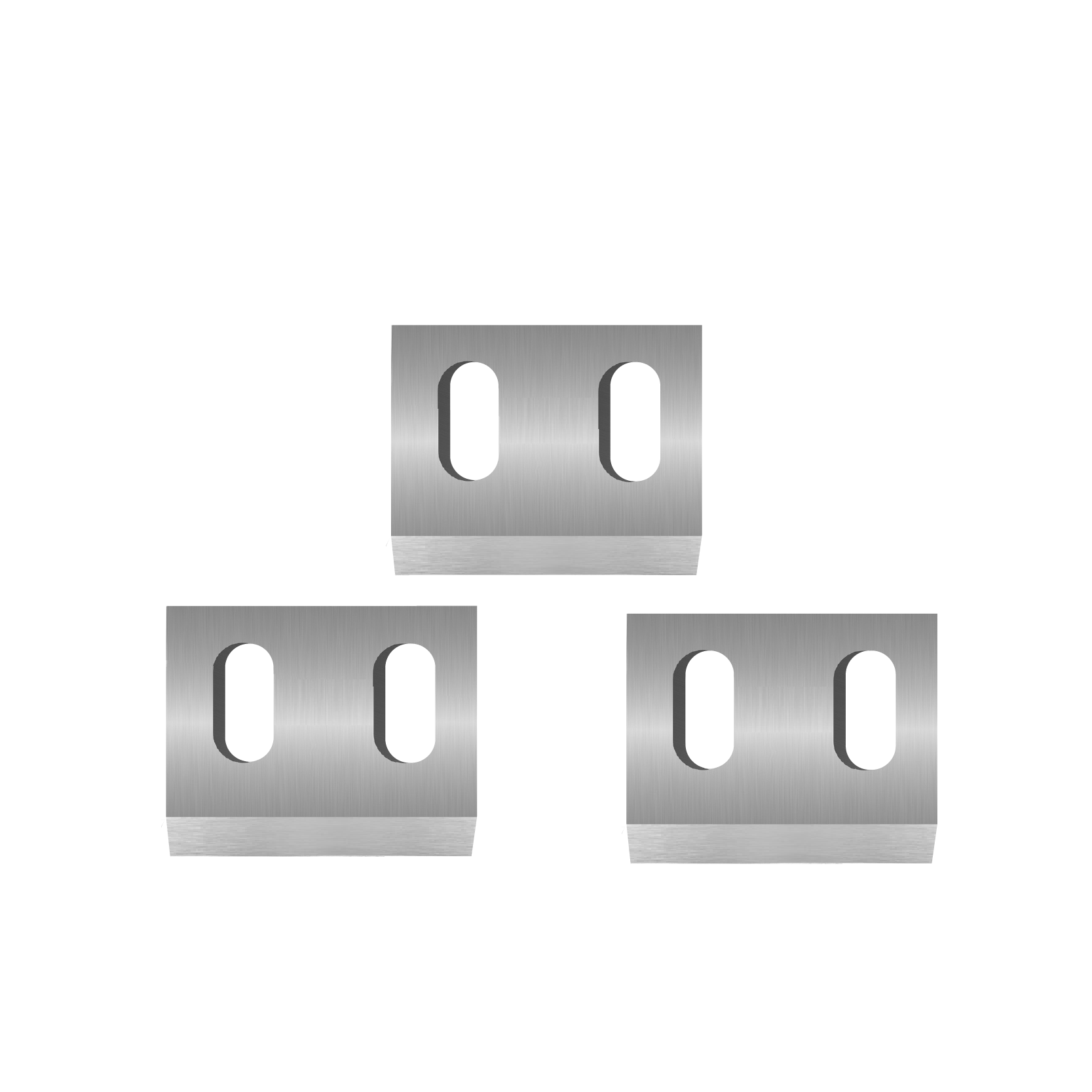
- Measured moving-knife photos, side profile, installed chamber photo, and fixed-side or bed-knife photo.
- Screen information if known.
- Current symptom: dust, fines, bridging, higher amps, noisy running, poor grip, or unstable output size.
- Whether the request is direct replacement, validation batch, or broader stage-fit review.
If the buyer also cares about labels, caps, color stream, or contamination before washing, say that in the same RFQ. It helps explain why the line now judges the cut more strictly than before.
Common commercial mistakes on blow-molding knife RFQs
The first mistake is to describe the job as "HDPE bottle knives" without naming whether it is inline reuse, central regrind, or wash-line feed preparation. The second mistake is to send only the moving knife and ignore the fixed side, screen, or output complaint. The third mistake is to assume that a line still belongs to inline granulation even after the scrap mix became larger, thicker, or more mixed.
All three mistakes create the same result: the supplier may quote a part that still fits the holder and still fails the commercial job. Better RFQs avoid that by naming the stage, the scrap form, and the reclaim target in the opening lines.
Internal routes and buyer-side next steps
Compare our blow-molding solution page, our HDPE bottle and container application guide, the general rigid-plastic application guide, the granulator knife-gap checklist, and the contact page. For product-side review, start with the granulator knife category, the bed-knife category, and the single-shaft shredder category.
The buyer rule is simple: do not ask the supplier to solve a stage-fit question with geometry data alone. Put the stage, the scrap form, the reclaim target, and the visible complaint into the RFQ together.
FAQ
Should I mention the reclaim target if I only want replacement knives?
Yes. In-house reuse, wash-line feed, and higher-purity HDPE reclaim do not always judge the cut by the same standard.
What if the line now handles both small bottles and larger canisters?
State that directly. The scrap form often decides whether the chamber still belongs to inline granulation or needs a broader stage review.
Do I need to send fixed-side or screen photos?
Yes, when the complaint includes dust, fines, noisy running, or output drift. Those parts help explain whether the chamber still supports a clean cut.
Can a supplier work from worn parts and phone photos?
Usually yes. Clear measured photos, installed-chamber photos, the scrap description, and the current symptom are often enough to begin technical review.
Which internal pages should I compare next?
Compare the blow-molding solution page, the HDPE bottle and container application guide, the rigid-plastic guide, the granulator knife-gap checklist, and the contact page.
Primary sources
This article is an original buyer-side synthesis built from official blow-molding, granulation, shredding, and HDPE-preparation sources.