
Tree-service brush chippers: knife sets, anvil condition, and lower-risk RFQs
When brush-chipper output turns stringy, feed slows, vibration rises, or crews keep stretching sharpening intervals, the safer buying decision is usually a knife-set plus anvil review rather than a same-size reorder.
Typical field problems
- •The machine still runs, but crews are seeing more chunks, slivers, poor self-feeding, discharge plugging, or a rougher cut after the last knife change.
- •The buyer has a worn knife and field photos, yet the real decision should include the anvil, the gap reset, the bolt condition, and whether the machine is still doing tree-service duty rather than a different wood job.
- •A same-dimension knife reorder looks easy, but the commercial risk now sits in drum balance, sharpening history, fixed-side wear, and how quickly the crew needs a stable restart.
Buyer conclusion first: when a tree-service brush chipper starts feeding more reluctantly, producing more chunks or slivers, throwing inconsistent chips, or shaking harder than before, the lower-risk commercial decision is usually to review the knife set and the anvil or counter-knife side together. Ordering only one same-size knife can restore bolt fit and still leave the crew with the same field complaint on the next job.
Machine-stage fit: official OEM guidance for tree-service brush chippers keeps coming back to matched knife sets, fixed-side condition, and gap control. On its official tree-care maintenance pages, Vermeer says sharp knives improve chip quality and productivity, dull knives increase fuel use, and replacement should be done in matched sets to preserve drum balance. Bandit’s parts guidance is equally direct: dull knives cause bad chips, chunks, slivers, more strain on the knife and mounting, more vibration, and more discharge plugging. Morbark’s BVR10 spec sheet highlights a side-load anvil for quick adjustment and flipping, which is a practical reminder that the fixed side is an active wear-part decision.
RFQ criteria and commercial decision logic: send the machine brand and model, the knife dimensions, installed photos, sharpening history if known, and the real field symptom. Add whether the crew is fighting poor pull-in, rough chip quality, vibration, extra fuel use, discharge plugging, or an anvil that no longer resets cleanly. If the machine is now seeing a different service environment than before, say that in the first message. For internal comparison before you place the order, review the tree-service brush-chipper application guide, the wood chipper knife RFQ article, the counter-knife and anvil article, and the contact page.
Why tree-service brush-chipper buying is not the same as generic wood processing
Brush chippers used by tree-care crews are bought against a different commercial clock from mill chippers, whole-tree biomass systems, or pallet-reduction lines. The crew often needs fast restart, predictable self-feeding, safe knife changes, and chip behavior that stays acceptable across mixed urban wood, storm debris, fibrous species, and tight daily schedules. That is why the RFQ should describe the actual field duty instead of assuming that “wood chipper” is enough context.
Vermeer’s official brush-chipper page places the machine family directly inside tree care, while its maintenance guidance ties knife condition to productivity and chip quality. Bandit’s hand-fed chipper overview also frames the equipment around tree-service crews rather than around general wood reduction. For buyers, the lesson is simple: if the machine is really doing roadside tree care, storm cleanup, or mixed branch work, the RFQ should say so. If it is actually running pallets, biomass, or large-volume wood reduction, compare this page with our wood pallet and biomass solution instead.
That distinction matters because the wear pattern and the acceptable service response are different. Tree-service buyers often need quick matched-set availability, reliable fit from worn samples, and a practical route for comparing knife replacement against anvil review. A site-fit solution page should therefore start from tree-service risk, not from generic metallurgy language.
Why matched knife sets, anvil condition, and gap reset belong in one replacement decision
Official guidance consistently treats brush-chipper cutting as a system rather than a loose knife bar. Vermeer’s sharpening guidance says the shear bar has to be readjusted after sharpening because the gap changes as the knife is shortened. Its daily maintenance article adds that knives should be checked for cracks and distortion, that double-edge knives have a minimum usable size, and that the shear bar should be checked and adjusted every time drum knives are replaced. Those are procurement signals, not only maintenance notes.
Bandit’s parts page says hand-fed chippers use dual-edge knives that can be flipped once one edge is beyond use. That means a buyer should say whether the request is for planned matched-set replacement, for a flip-and-spare strategy, or for a chamber review because the anvil side or hardware is already causing instability. If the anvil has already been adjusted to its limit or the clamping faces are showing uneven wear, ordering only a same-outline knife is not the lowest-risk decision anymore.
For RFQs, the practical rule is straightforward: send knife photos, anvil photos, and the current gap or reset condition together whenever the complaint includes vibration, poor feeding, rough chips, or repeated sharpening cycles. The cost of one more photo is far lower than the cost of repeating the same field failure after installation.
What the official maintenance signals mean commercially for buyers and dealers
Official OEM advice often looks like maintenance language, but it translates directly into buying logic. If Vermeer says knife sets should be replaced in matched pairs to maintain drum balance, the buyer should not request one lone replacement knife without also saying why the remaining mate is still safe. If Bandit says dull knives increase vibration and plugging, then a complaint about discharge blockage or poor pull-in belongs in the RFQ because it changes whether the order should be knife-only or knife-plus-fixed-side review.
Morbark’s side-load anvil language matters for the same reason. Quick adjustment and flipping are not just convenience features. They tell the buyer that the fixed side is intended to stay active in maintenance planning. Once that quick-adjust path is no longer holding the cut correctly, the quotation should acknowledge it. The parts order is no longer just “send knives”; it becomes “send the wear parts that return the cutting interface to working condition.”
Dealers and service teams should also describe whether the job is urgent restart stock, planned shutdown spares, or a wider aftermarket review from worn parts. Those are different commercial situations. The supplier needs that context before recommending whether a direct replacement batch is enough or whether the RFQ should widen to the knife set, anvil, bolts, and chamber hardware together.
Common field symptoms and what they usually mean
If the chipper stops self-feeding as well as it used to, the first suspicion is often “the knives are dull.” Sometimes that is correct. But when the complaint comes with chunks, slivers, extra vibration, or discharge plugging, the buyer should assume that the cutting pair and the installation condition need review together. Dull knives are real, but a worn or badly adjusted fixed side can make a new knife look commercially weak within the first jobs.
If the crew is now processing harder, dirtier, or more fibrous material than before, that feed change also belongs in the RFQ. Vermeer’s official maintenance tips note that wear intervals depend heavily on the type of wood and chipping conditions. That does not justify making unsupported service-life promises. It does justify telling the supplier what the machine is actually cutting now rather than relying on an old part number from a different duty.
For mixed symptoms, describe both the first visible complaint and the downstream effect. Say if the machine feeds badly, if chips are less uniform, if operators are forcing material harder into the infeed, or if sharpening frequency accelerated after a change in wood mix or jobsite contamination. Those are buyer clues that reduce repeat failures more effectively than one extra decimal place on the dimension sheet.
RFQ checklist for lower-risk brush-chipper replacements
The strongest RFQs in this cluster combine geometry with machine condition and field context. Send these items in the first message where possible:
- Machine brand, model, and serial number if available.
- One face photo, one side-profile photo, and one installed photo of the knife with a ruler in frame.
- One photo of the anvil, shear-bar area, or fixed side that shows wear or adjustment position.
- Knife dimensions, hole spacing, bevel direction, and whether the part is new, flipped, sharpened, or already near minimum usable size.
- The current field symptom: poor pull-in, chunks, slivers, vibration, plugging, extra fuel use, or rougher chip size.
- The service duty: tree care, storm cleanup, mixed hardwood and softwood, fibrous species, or another real field condition.
- Whether the buyer wants direct matched-set replacement, knife-plus-anvil review, or a wider chamber review from worn parts.
- Quantity, shutdown timing, and destination country if export packing matters.
That checklist is short enough for a crew or dealer to send quickly, but detailed enough to stop the most common aftermarket mistake: buying a same-size knife while ignoring the fixed side and the actual field symptom.
Practical selection and internal routes
For planned spares on a healthy machine, start with the brush chipper knife, the wood chipper replacement knife, and the Bandit-compatible drum chipper knife. If the symptom includes vibration, poor chip quality, or repeated gap reset, widen the comparison to the counter-knife and anvil set and the Bandit-compatible counter-knife and anvil set.
Then compare the application and blog routes that support the same decision path: the tree-service brush-chipper application guide, the wood chipper knife RFQ guide, the counter-knife and anvil RFQ guide, and the contact page. Those pages keep the RFQ attached to actual site inventory, actual machine stages, and actual tree-service complaints instead of generic wood-chipping language.
The buyer-side rule is simple: when the machine is healthy and the duty is unchanged, a direct matched-set replacement can be low risk. When the duty changed, the field symptoms widened, or the fixed side is already part of the complaint, a broader knife-plus-anvil review is usually the safer commercial move.
FAQ for brush-chipper knife and anvil replacements
Do I need to mention the anvil if I mainly want new brush-chipper knives?
Yes, when the complaint includes poor feeding, rough chips, vibration, plugging, or repeated gap adjustment. The fixed side is part of the cutting result, not an afterthought.
Can you quote from a worn knife and phone photos?
In many cases, yes. Clear measured photos, installed-seat photos, the machine model, and the real field symptom are enough to start technical review.
Why does a same-size replacement sometimes still perform badly?
Because hole fit alone does not confirm drum balance, anvil condition, gap reset, bolt condition, or whether the duty changed. Official OEM guidance links all of those factors to chip quality and stable feeding.
Should knife changes be quoted as matched sets?
Usually yes for brush-chipper work. Official Vermeer guidance says matched replacement supports drum balance, and buyers should explain clearly if they are not ordering a full paired set.
Which internal pages should I compare before sending the inquiry?
Compare the tree-service application guide, the two wood-chipper RFQ articles, the wood-chipper and anvil product pages, and the contact page so the quote reflects the whole cutting system.
Primary sources
This page is an original buyer-side synthesis built only from official OEM pages, manuals, and maintenance guidance tied directly to tree-service brush-chipper knives, anvils, and adjustment logic.
- Sharp brush chipper knives maximize chip quality and productivity (Vermeer): says sharp knives improve chip quality and productivity, dull knives increase fuel use, and replacement should be done in matched sets to preserve drum balance.
- When you should sharpen brush chipper knives vs. buy new (Vermeer): explains that the shear bar must be readjusted after sharpening because knife geometry changes.
- Daily brush chipper maintenance (Vermeer): covers crack inspection, distortion checks, minimum usable size, and checking or adjusting the shear bar whenever drum knives are replaced.
- Parts (Bandit): says dull knives cause bad chips, chunks, slivers, more strain on the knife and mounting, more vibration, and more discharge plugging.
- Parts Page (Bandit): says Bandit hand-fed chippers use dual-edge steel knives that can be flipped once one side is beyond use.
- BVR10 Brush Chipper spec sheet (Morbark): highlights a side-load anvil for quick adjustment and flipping, supporting buyer-side fixed-side review logic.
Example parts from our catalog
Close shapes for quoting—send ruler photos or drawings so the factory confirms fit before you lock in quantity.
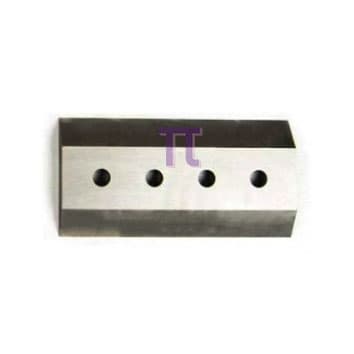
WCK-007
Brush Chipper Knife
Brush Chipper Knife is built for brush chipper lines and tree service maintenance. Available in A8 for edge retention, impact tolerance, and repeatable regrinding. The profiled body suits fixed or rotary stations where alignment and edge exposure matter.
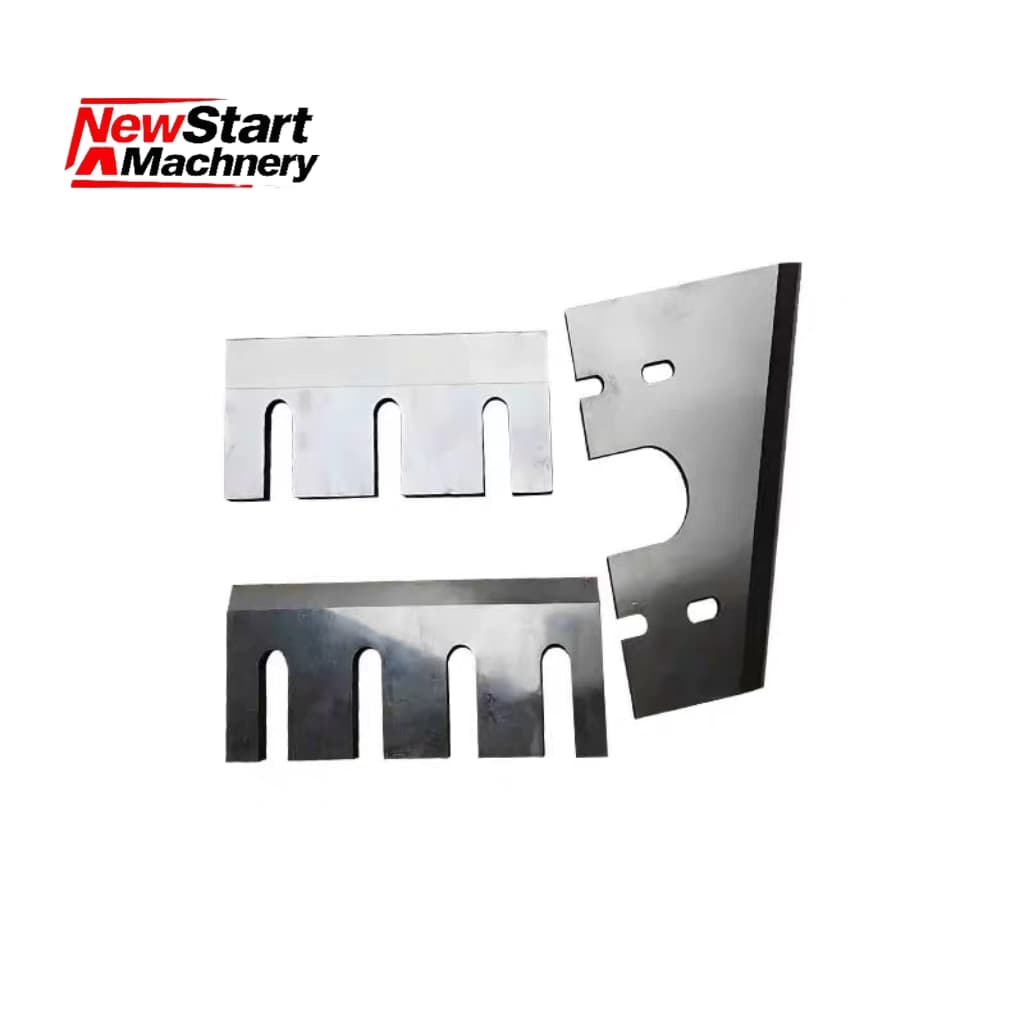
WCK-004
Wood Chipper Replacement Knife
Wood Chipper Replacement Knife is built for drum wood chipper lines and disc chipper systems. Available in HSS / 9CrSi / SKD11 / carbide-tipped alloy steel for edge retention, impact tolerance, and repeatable regrinding. The insert-style format fits compact cutter seats and short replacement positions.
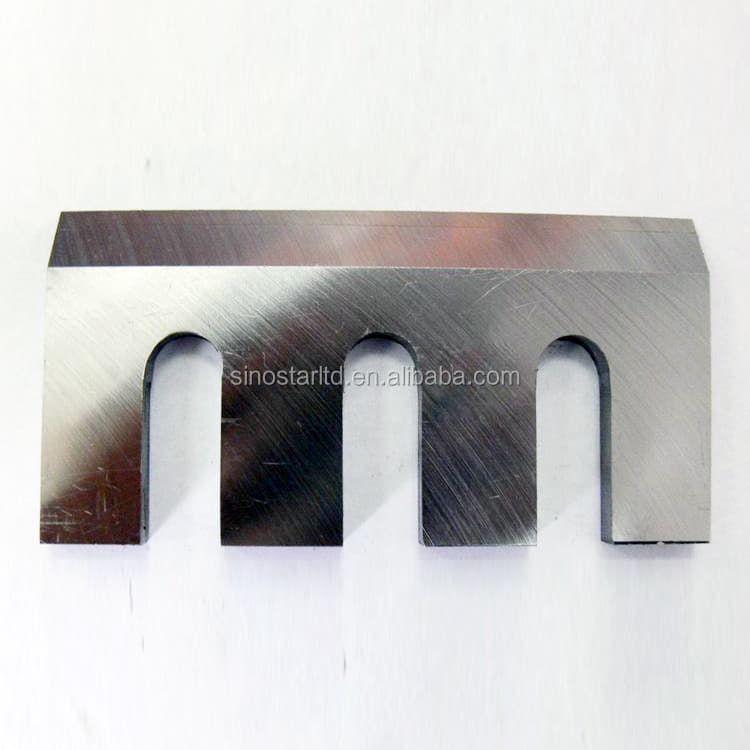
WCK-009
Bandit-Compatible Drum Chipper Knife
Bandit-Compatible Drum Chipper Knife is built for bandit-style drum chipper maintenance and forestry and biomass chipping. Available in SKD11 / D2 / HSS for edge retention, impact tolerance, and repeatable regrinding. The profiled body suits fixed or rotary stations where alignment and edge exposure matter.
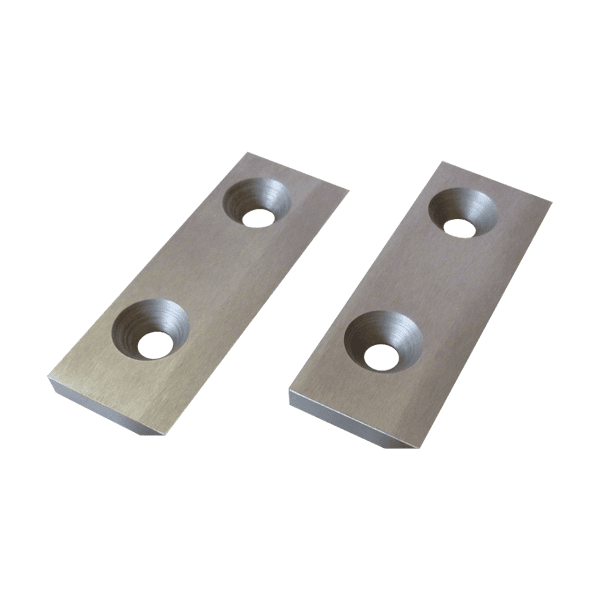
CCA-001
Chipper Counter Knife and Anvil Set
Chipper Counter Knife and Anvil Set is built for counter knife replacement and anvil and bed knife maintenance. Available in SKD11 for stable counter edges and controlled chip sizing. The profiled body suits fixed or rotary stations where alignment and edge exposure matter.
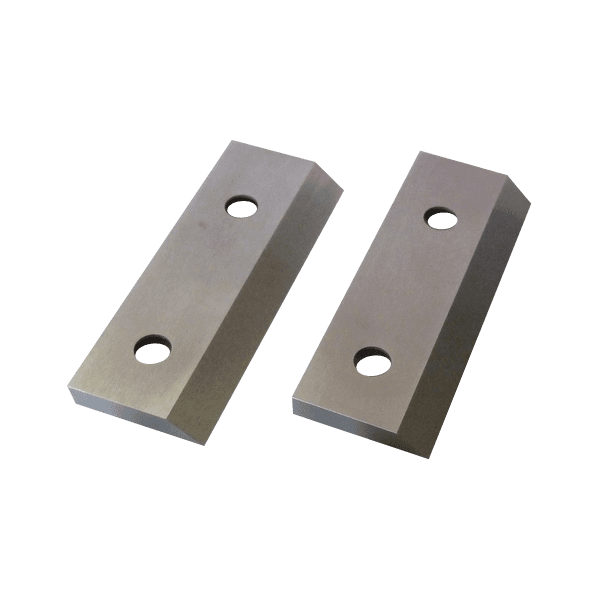
CCA-003
Bandit-Compatible Counter Knife and Anvil Set
Bandit-Compatible Counter Knife and Anvil Set is built for bandit chipper counter knife replacement and anvil set maintenance. Available in SKD11 for stable counter edges and controlled chip sizing. The profiled body suits fixed or rotary stations where alignment and edge exposure matter.
Related catalog categories
Deep reading
Wood Chipper Knife RFQ Guide: What Buyers Should Confirm Before Ordering Rotor Knife Sets
A source-backed buyer guide for drum, disc, and brush chipper rotor knives: machine-family fit, wood-stream clues, hardware questions, and the RFQ details that reduce wrong-fit reorders.
Read articleWood Chipper Counter Knife and Anvil RFQ Guide: What Buyers Should Confirm Before Ordering
A source-backed buyer guide for wood chipper counter knives and anvils: chip quality, knife pairing, field photos, and the RFQ details that prevent wrong-fit reorders.
Read articleBlade Maintenance Tips for Longer Life
Inspection intervals, alignment checks, and cleaning—for granulators, crushers, and shredders.
Read article
Need this applied to your line?
Mention this solution hub in your message so sales engineering opens the thread with the right checklist.